
This take may not win me any popularity awards. #unpopular
AI gets a bad rap. And in many cases, rightly so.
BUT how we use AI largely depends on us. You, me, us.
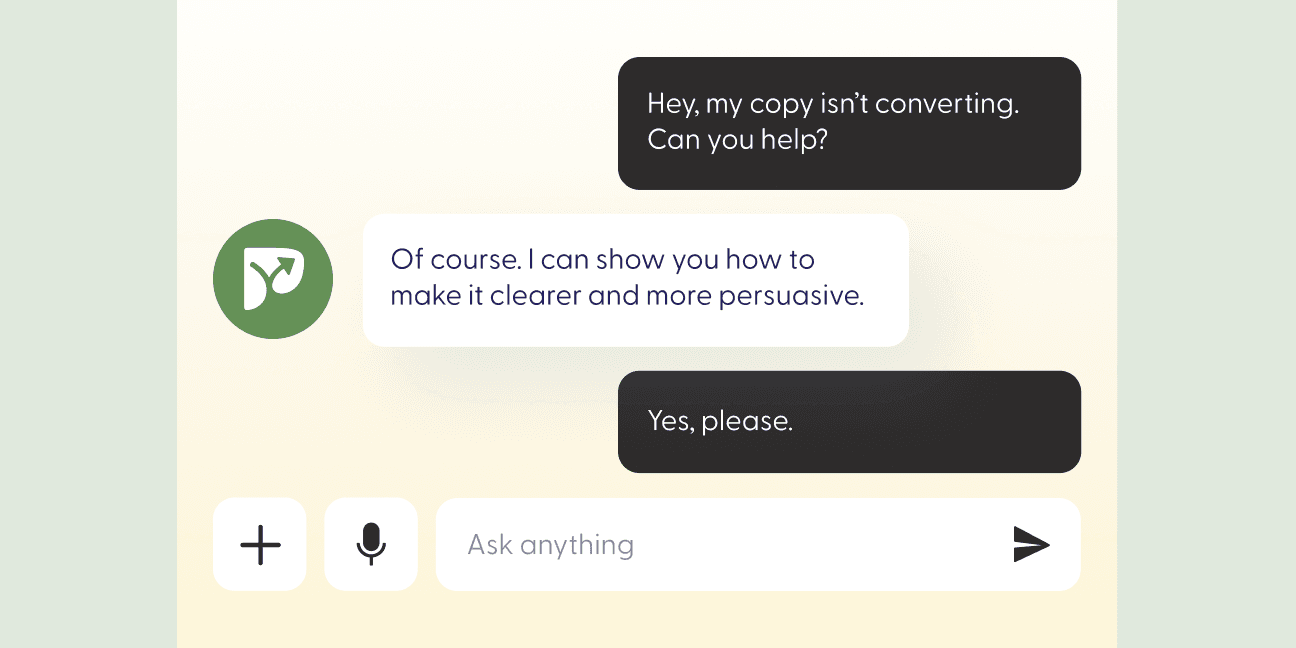
I was reminded of this while earlobe-deep in two projects. One was building new AI assistants for our students.
The other was writing TONS of copy: a flash sale funnel for a sewing-for-beginners class, then their webinar funnel. (So fun!)
Two vastly different projects, and yet the same. Both were creative and strategic. Both were deep, meaningful work that'll impact others.
Here's my take on using AI without losing creativity: where I use AI, where I refuse to, and the simple test I run before I hand AI any task.
Quick answer: Using AI only makes you less creative if you let it do your thinking. How you use AI is your choice. Keep the work your brain does well, lean on AI where you struggle or lack technical know-how, and only use it when it makes you money, saves you time, or improves your customer experience.
Does using AI make you less creative?
It can, if you let it think for you. It doesn't have to, because how you use AI is up to you.
It's up to us whether we use AI to plagiarize, waste time, or rot our brains.
OR
Whether we use it as a partner to solve problems we couldn't solve earlier, add value where we find gaps, and build solutions that create calm where chaos existed.
I know I'm choosing the latter.
We have more control over our use of AI than we think we do.
We are still the superior brains. 🔥
How to Stay Creative When "Creativity" Feels Like a Click Away
Staying creative when it's oh-so-easy to outsource it to "someone" who can spit out 60 different versions of a headline in 60 seconds is, yep, hard. Especially when you also want to stay relevant and not bury your head in the sand.
One of our AI students, Hillary Presswood, put that fear into one question: "Am I a traitor to my people?"
That fear deserves an answer. So let's start with how creativity works.
Why creativity isn't a lightning strike
Creativity is a process. It takes patience and a long view. That's exactly how I approach both building with AI and writing.
I've been reading Perennial Seller by Ryan Holiday (highly recommend!). In the chapter on the creative process, he talks about patience, building for the long term, and realizing that creativity is not a lightning strike.
I wholeheartedly AGREE! 🙌🏼
Holding contradictory ideas at the same time
Holiday also talks about John Keats' idea of "negative capability." He describes it as "the holding of multiple contradictory ideas in our head at the same time" and calls it "an essential phase of creativity."
THAT is how I feel right now. I have SO many contradictory ideas whirling around in my head that it's giving me vertigo. Kidding. I think.
Here's a pair I hold all the time: I can love AI. AND I can love my analog life.
Two things can be true. You don't have to choose, my friend.
If you want help making room for that kind of thinking, read how we protect time for deep, creative work.

Is using AI cheating?
Using AI isn't cheating when you stay the creative brain and the strategist. It turns into a problem when you hand over your judgment along with the busywork.
AI isn't going anywhere. Can you choose not to use it? Absolutely.
Is it sometimes faster to write copy on your own? OMIGOSH, yes!
Now flip it around. 👀
If you use AI as your junior copywriter, it gives you an instant promotion. You become the lead copywriter, the copy chief, the strategist who knows good copy AND can recognize garbage when it sees it.
You're sharpening your skills by questioning what it gives you. You're speeding up the process without cutting corners. And you're practicing critical thinking at every step.
We have a line for this in our business: AI does the dishes, not the art. It handles the ops. Your judgment stays.
Amy Griffin, another of our AI students, said it in a way I love: "I'm leaving knowing my strategic judgment is exactly what makes this work."
Sidenote: I've written more about how I use AI as a strategist and copywriter, day to day.
Where should you use AI in your business (and where shouldn't you)?
Use AI where it fills a gap: tasks you struggle with, technical work you don't have the know-how for, and implementation that helps others faster.
Skip it where your brain can easily do the job.
When my brain can easily do the job, I don't use AI
You won't find me using AI when my brain can easily do the job. ❌
That includes writing. My emails and every copy asset for our clients are typed out by my own fingers.
I'm an AI strategist who doesn't hire AI to write for her. GASP!
I push myself to write the old-fashioned way, without letting Claude, ChatGPT, or whatever's the newest LLM walk all over my keyboard. 👩🏻💻
Where I struggle (hello, coding!)
Coding is where I struggle. So that's where I lean on AI.
Where I lack the technical know-how
Where I don't have enough technical know-how, I know AI will step up.
Case in point: this ManyChat automation Claude built for me.
Where I can help others faster
Where I can help others free up time, create more revenue, or simply enjoy the business they run, I pair my strategic brain with AI's faster implementation.
That's the thinking behind The Profitable AI Accelerator: your AI employees, ready to hire, across Admin, Marketing, Sales, Support, and Finance, with your strategic brain still making the calls.
What I've handed to AI
A lot!! 😂
Audience Focus Group Testing, for starters.
Building techy automations for us. From checkout carts to setting up complex surveys to Manychat automations.
Building apps for personal use. Like my Mapboard, digital whiteboard and SkinSafe, my skincare ingredient analyzer.
Testing and evaluating the AI teams I build for our clients and our selves.
Acting as my Course Concierge and uploading ALL our course content to Circle, including thumbnails and zipped files.
Running a daily scan to find relevant podcast opportunities for me and adding them to a Notion database.
I could go on but you get the point … Using AI intentionally and strategically gives us more capacity to handle the unscalable, can-only-be-done-by-us work.

Not sure which jobs to hand AI first?

Grab the free AI Team Blueprint Builder and turn your weekly to-do list into your AI org chart. It's an easy place to start drawing your own line.
How do you decide what to hand to AI?
Run what I call the CEO Filter test first.
If your AI use isn't making you money, saving you time, and/or improving your customer experience, you don't need it.
I tell our AI consulting clients the same thing.
We don't need more AI-generated memes that add nothing but noise to already shouty feeds.
What we do need is depth, while doing away with the busy work that clogs calendars. 🔥
That's my line in the sand when it comes to using AI in our business.
So don't use AI because it's the cool kid on the block.
Use it because it opens up new channels of creativity, speeds up growth, and is focused on helping your audience.
Want to see the test in action?
Here are 9.5 examples of using AI intentionally from our own email marketing.
Three guardrails before anything ships
Don't use AI to condense, summarize, or transcribe intellectual property, whether it belongs to you or someone else. That means no uploading course content or a book into an AI tool.
Always fact-check and plagiarism-check. Always, always, ALWAYS.
Remember that the buck stops with you. You can't go back to a client or a reader and say, "Well, AI gave me this information." Nuh-uh.
Roxana Gramada, one of our AI students, put the risk this way: "unless very well pointed towards a goal, it will generate seductive fluff that is hard to discern from."
You're the creative brain and the conversion strategist. Let's keep it that way, 'kay?

How do you keep using AI without losing creativity?
Make time for analog, off-screen habits that feed your thinking. The more I work with AI, the more I adore analog activities.
A few of mine:
Journaling by hand and thinking on paper
Walks without my AirPods (gasp!) or my phone
An analog watch, not a smart one
Paperbacks (fiction and non-fiction)
Baking from a recipe book, plus learning languages
Taking social media apps off my phone for a stretch
When I took those apps off my phone for a week, I loved how quiet it felt and how much clearer my thinking was.
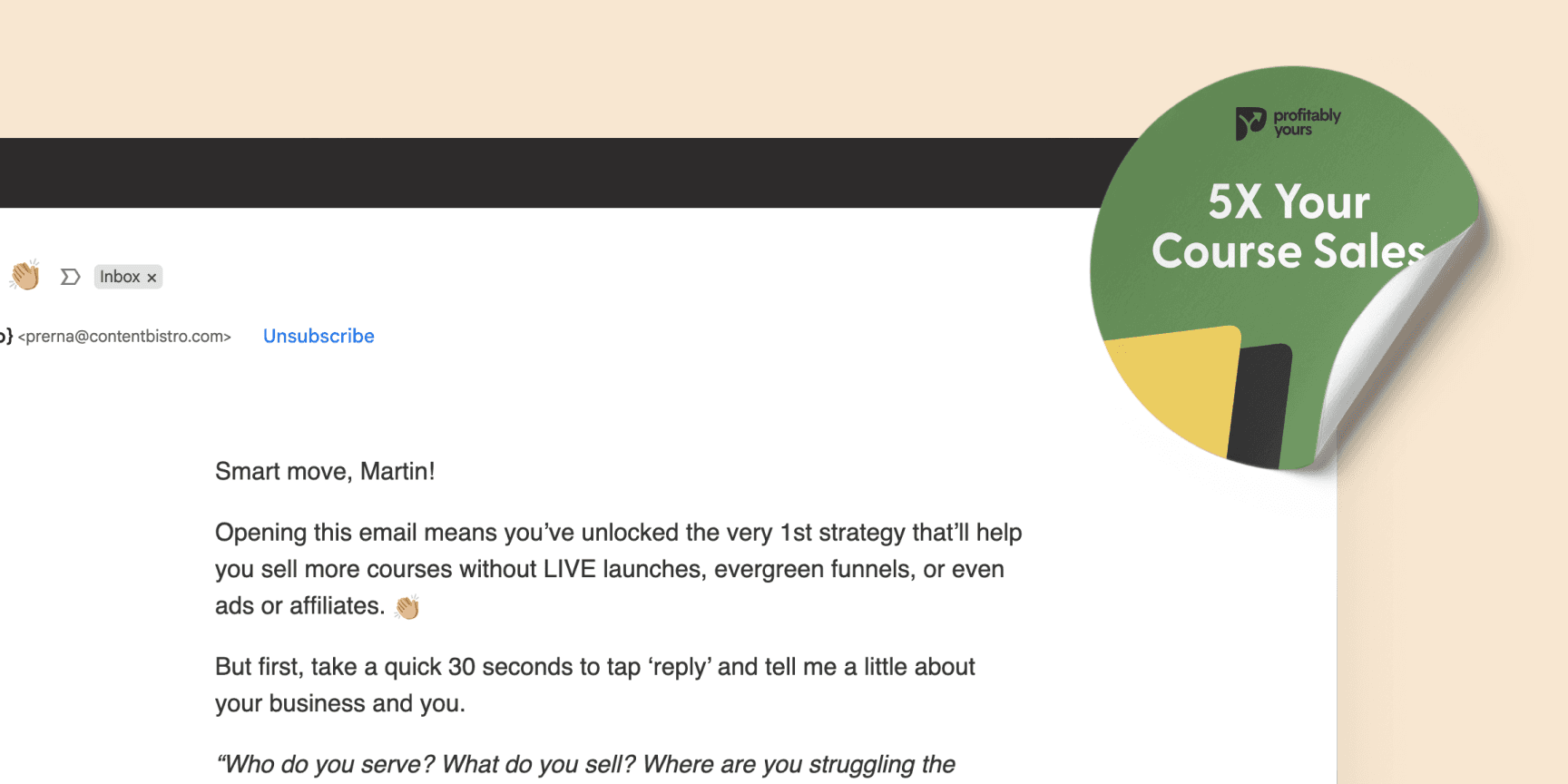
And yes, I still write to you. Every week (sometimes twice), I sit my butt down and write my emails. Make sure you're signed up! 📧
No strategy. No agenda. Just what's on my mind.
Staying creative doesn't mean we'll stop using AI.
Nope.
We're always mindful of how we use it. Which means you won't see us using it to generate photos of us shaking hands with Taylor Swift. 😂
Staying relevant doesn't have to come at the cost of your creativity. Learn and use whatever's the latest tech out there. Just don't let it take away from what makes you unequivocally YOU.
Why creativity looks different in every season
Creativity doesn't look the same for everyone. It doesn't even have to look the same for every season of life.
Some seasons, creativity means writing every word yourself.
Other seasons, it means solving a problem you couldn't solve before, because AI handled the part you didn't have the know-how for.
Problem-solving is a creativity booster, at least for me. 🧠
Social Sidenotes: I've been an entrepreneur for 15+ years. If you're feeling overwhelmed, or rather underwhelmed, by your business right now, I shared something on Instagram that may help.
I've also written about what to do if you're in a tough season in business.
A little storytime (and why we build on our own terms)
I'm often amazed at the audacity I had as a 20-something. 😂
We got married at 25.
Had a baby at 28.
Started blogging at 28 too, with no idea what writing online involved.
I just started. 🤷🏻♀️
At 29 and 30, it was family drama and a chronically ill husband.
We watched all our savings dwindle.
At 31, Mayank and I turned the blog into a business. THIS business. 🙌🏼
All while raising our daughter, dealing with my own chronic health issues, continuing family drama, and with zero business know-how or connections.
We had nothing to lose. Literally.
Who even was I? 😂
And today, 15+ years later, not much has changed. Mayank and I still believe we can do this on our terms.
And we want that for you too. (The longer version: how Mayank and I built our business on our own terms.)
Whether it's using AI, being creative, or building a more profitable business, you can do it on your terms. 💯
Intentionally. Strategically. Profitably.
So, what's your next step?
Don't let using AI mean you're no longer creative.
If anything, you could be even more creative. It may just look different.
And isn't that the whole point? 💯
Try this: pick one task on your plate this week and run it through the test. Does handing it to AI make you money, save you time, or improve your customer experience? If yes, hand it over. If your brain can easily do the job, keep it.
Then come tell me on Instagram: how are YOU being creative while partnering with AI?
Turn your weekly to-do list into your AI org chart
You've seen where I draw my line with AI. Now draw yours with the free AI Team Blueprint Builder.
Questions You Might Have About Using AI Without Losing Creativity
What should you not use AI for in your business?
Skip AI for work your brain can easily do, for content that only adds noise, and for summarizing or transcribing intellectual property, yours or anyone else's. My rule of thumb: if it won't make you money, save you time, or improve your customer experience, you don't need AI for it. (AI-generated memes, I'm looking at you.)
Does AI-written copy always sound generic?
AI-written copy sounds generic when it has nothing to work from. Give it your voice, your offers, and your buyer context, and it gets a lot closer to sounding like you. Even so, I type my emails and every piece of client copy myself. I use AI for research, testing, and building systems.
Will AI replace creative business owners?
AI won't replace you if you keep the strategy and the judgment. We say AI does the dishes, not the art. It handles the ops while you make the calls and decide what ships. That judgment is exactly what makes AI useful in the first place.
Can AI make you more creative?
Yes, AI can make you more creative, though it may look different from what you expect. When AI takes the busywork, you get more room for the work only you can do. Problem-solving is a creativity booster for me, and AI helps me solve problems I couldn't solve before, like building a ManyChat automation.
How do you avoid AI brain rot?
Avoid AI brain rot by treating AI as your junior copywriter and yourself as the copy chief. Question everything it gives you, fact-check and plagiarism-check it, and remember the buck stops with you. Then feed your brain offline: I journal by hand, walk without my AirPods, and read paperbacks.

Newsletter
Join founders and operators building calmer, more profitable sales systems
No spam. Just smart strategy that works.